199 Django Atomic Transaction Čerstvé
199 Django Atomic Transaction Čerstvé. # get offset of last item (needed because it may be less than the chunk size). Mar 06, 2019 · a transaction is an atomic set of database queries. The django.db.transaction module allows you to combine multiple database changes into an atomic transaction: These functions take a using argument which should be the name of a database. If it isn't provided, django uses the …

Prezentováno Optimizing The Django Admin Paginator Haki Benita
Atomic allows us to create a block of code within which the atomicity on the database is guaranteed. From django.db import migrations class migration(migrations.migration): Foo = foo() sid1 = transaction.savepoint() foo.save() if foo.whatever: Django provides a single api to control database transactions.For completeness, withouttransaction.atomic(), by default django runs in autocommitmode, which means every statement runs in its own read committedtransaction and committed immediately.
For completeness, withouttransaction.atomic(), by default django runs in autocommitmode, which means every statement runs in its own read committedtransaction and committed immediately. Save # transaction now contains a.save() and b.save() if want_to_keep_b: From django.db import transaction # open a transaction @transaction. # get offset of last item (needed because it may be less than the chunk size). While tempting to translate auto as don't worry, even in autocommit mode updates can block , deadlock , or miss rows.

# get offset of last item (needed because it may be less than the chunk size). Error = 'baz' if error: If it isn't provided, django uses the … Error = 'blah' sid2 = transaction.savepoint() foo.create_saved_instances() # creates more saved foo instances in a separeate func if foo.something_else: Savepoint_commit (sid) # open transaction still contains a.save() and b.save() else: It's possible to execute parts of the migration inside a transaction using atomic () or by passing atomic=true to runpython. These functions take a using argument which should be the name of a database. Savepoint_rollback (sid) # open … Applied to the above scenario, this can be applied as a decorator: If you attempt to run database queries before the rollback happens, django will raise a transactionmanagementerror. It's possible to execute parts of the migration inside a transaction using atomic () or by passing atomic=true to runpython.

From django.db import transaction # open a transaction @transaction. While tempting to translate auto as don't worry, even in autocommit mode updates can block , deadlock , or miss rows. Savepoint_rollback (sid) # open … Applied to the above scenario, this can be applied as a decorator: From django.db import migrations class migration(migrations.migration):

Save # transaction now contains a.save() and b.save() if want_to_keep_b: Savepoint_commit (sid) # open transaction still contains a.save() and b.save() else: Applied to the above scenario, this can be applied as a decorator:. # get offset of last item (needed because it may be less than the chunk size).

Django provides a single api to control database transactions... Save # transaction now contains a.save() sid = transaction.. These functions take a using argument which should be the name of a database.

Mar 06, 2019 · a transaction is an atomic set of database queries.. After such an error, the transaction is broken and django will perform a rollback at the end of the atomic block.

Save # transaction now contains a.save() and b.save() if want_to_keep_b: After such an error, the transaction is broken and django will perform a rollback at the end of the atomic block. Oct 10, 2020 · no explicit transaction, with autocommit. If you attempt to run database queries before the rollback happens, django will raise a transactionmanagementerror. Offset = queryset.order_by(pk):chunk_size.count() if not offset: Save # transaction now contains a.save() sid = transaction. Atomicity is the defining property of database transactions.

Savepoint_commit (sid) # open transaction still contains a.save() and b.save() else:.. .. From django.db import migrations class migration(migrations.migration):
These functions take a using argument which should be the name of a database.. These functions take a using argument which should be the name of a database. If the block of code is successfully completed, … # get offset of last item (needed because it may be less than the chunk size). Break # fetch primary key of last item and use it to delete the chunk. These functions take a using argument which should be the name of a database.

The django.db.transaction module allows you to combine multiple database changes into an atomic transaction: Break # fetch primary key of last item and use it to delete the chunk. Error = 'baz' if error: Django provides a single api to control database transactions. Error = 'blah' sid2 = transaction.savepoint() foo.create_saved_instances() # creates more saved foo instances in a separeate func if foo.something_else:.. Django provides a single api to control database transactions.

From django.db import migrations class migration(migrations.migration): Applied to the above scenario, this can be applied as a decorator: Atomic allows us to create a block of code within which the atomicity on the database is guaranteed. It's possible to execute parts of the migration inside a transaction using atomic () or by passing atomic=true to runpython. Error = 'baz' if error: If you attempt to run database queries before the rollback happens, django will raise a transactionmanagementerror.. Save # transaction now contains a.save() sid = transaction.

After such an error, the transaction is broken and django will perform a rollback at the end of the atomic block. Mar 06, 2019 · a transaction is an atomic set of database queries. For completeness, withouttransaction.atomic(), by default django runs in autocommitmode, which means every statement runs in its own read committedtransaction and committed immediately. Foo = foo() sid1 = transaction.savepoint() foo.save() if foo.whatever: # get offset of last item (needed because it may be less than the chunk size). If it isn't provided, django uses the …

Oct 10, 2020 · no explicit transaction, with autocommit. From django.db import transaction # open a transaction @transaction. Atomic allows us to create a block of code within which the atomicity on the database is guaranteed. Save # transaction now contains a.save() and b.save() if want_to_keep_b: # get offset of last item (needed because it may be less than the chunk size). Oct 10, 2020 · no explicit transaction, with autocommit. Savepoint_commit (sid) # open transaction still contains a.save() and b.save() else:.. Save # transaction now contains a.save() sid = transaction.

Within such a migration, all operations are run without a transaction. Error = 'baz' if error:. Atomicity is the defining property of database transactions.

# get offset of last item (needed because it may be less than the chunk size).. . It's possible to execute parts of the migration inside a transaction using atomic () or by passing atomic=true to runpython.

If it isn't provided, django uses the … Offset = queryset.order_by(pk):chunk_size.count() if not offset: Error = 'blah' sid2 = transaction.savepoint() foo.create_saved_instances() # creates more saved foo instances in a separeate func if foo.something_else: Django provides a single api to control database transactions... a series of database operations such that either all occur, or nothing occurs.

Mar 06, 2019 · a transaction is an atomic set of database queries. If the block of code is successfully completed, … Foo = foo() sid1 = transaction.savepoint() foo.save() if foo.whatever: While tempting to translate auto as don't worry, even in autocommit mode updates can block , deadlock , or miss rows. Applied to the above scenario, this can be applied as a decorator: It's possible to execute parts of the migration inside a transaction using atomic () or by passing atomic=true to runpython. Mar 06, 2019 · a transaction is an atomic set of database queries. The django.db.transaction module allows you to combine multiple database changes into an atomic transaction: Atomicity is the defining property of database transactions. Offset = queryset.order_by(pk):chunk_size.count() if not offset: Error = 'blah' sid2 = transaction.savepoint() foo.create_saved_instances() # creates more saved foo instances in a separeate func if foo.something_else:. From django.db import transaction # open a transaction @transaction.

If the block of code is successfully completed, … Django provides a single api to control database transactions. Atomicity is the defining property of database transactions. If you attempt to run database queries before the rollback happens, django will raise a transactionmanagementerror. Oct 10, 2020 · no explicit transaction, with autocommit. Mar 06, 2019 · a transaction is an atomic set of database queries. The django.db.transaction module allows you to combine multiple database changes into an atomic transaction: If the block of code is successfully completed, … a series of database operations such that either all occur, or nothing occurs. Savepoint_commit (sid) # open transaction still contains a.save() and b.save() else: Within such a migration, all operations are run without a transaction. Atomicity is the defining property of database transactions.

Oct 10, 2020 · no explicit transaction, with autocommit. For completeness, withouttransaction.atomic(), by default django runs in autocommitmode, which means every statement runs in its own read committedtransaction and committed immediately. Foo = foo() sid1 = transaction.savepoint() foo.save() if foo.whatever:. Offset = queryset.order_by(pk):chunk_size.count() if not offset:

The django.db.transaction module allows you to combine multiple database changes into an atomic transaction:.. Foo = foo() sid1 = transaction.savepoint() foo.save() if foo.whatever: Django provides a single api to control database transactions. Error = 'blah' sid2 = transaction.savepoint() foo.create_saved_instances() # creates more saved foo instances in a separeate func if foo.something_else: From django.db import migrations class migration(migrations.migration): Savepoint_rollback (sid) # open … a series of database operations such that either all occur, or nothing occurs. Mar 06, 2019 · a transaction is an atomic set of database queries. It's possible to execute parts of the migration inside a transaction using atomic () or by passing atomic=true to runpython. The django.db.transaction module allows you to combine multiple database changes into an atomic transaction: Oct 10, 2020 · no explicit transaction, with autocommit.

After such an error, the transaction is broken and django will perform a rollback at the end of the atomic block. If it isn't provided, django uses the … While tempting to translate auto as don't worry, even in autocommit mode updates can block , deadlock , or miss rows.. Mar 06, 2019 · a transaction is an atomic set of database queries.

After such an error, the transaction is broken and django will perform a rollback at the end of the atomic block. The django.db.transaction module allows you to combine multiple database changes into an atomic transaction: Django provides a single api to control database transactions. If you attempt to run database queries before the rollback happens, django will raise a transactionmanagementerror. Save # transaction now contains a.save() sid = transaction. After such an error, the transaction is broken and django will perform a rollback at the end of the atomic block. Break # fetch primary key of last item and use it to delete the chunk. These functions take a using argument which should be the name of a database. Savepoint_rollback (sid) # open … From django.db import transaction # open a transaction @transaction.. Oct 10, 2020 · no explicit transaction, with autocommit.

While tempting to translate auto as don't worry, even in autocommit mode updates can block , deadlock , or miss rows... After such an error, the transaction is broken and django will perform a rollback at the end of the atomic block. Savepoint_commit (sid) # open transaction still contains a.save() and b.save() else: For completeness, withouttransaction.atomic(), by default django runs in autocommitmode, which means every statement runs in its own read committedtransaction and committed immediately. If you attempt to run database queries before the rollback happens, django will raise a transactionmanagementerror. Savepoint_rollback (sid) # open … If it isn't provided, django uses the … Atomic allows us to create a block of code within which the atomicity on the database is guaranteed... Applied to the above scenario, this can be applied as a decorator:

Savepoint_rollback (sid) # open … Within such a migration, all operations are run without a transaction. Foo = foo() sid1 = transaction.savepoint() foo.save() if foo.whatever: From django.db import transaction # open a transaction @transaction. Error = 'baz' if error:.. Error = 'baz' if error:

The django.db.transaction module allows you to combine multiple database changes into an atomic transaction: Atomicity is the defining property of database transactions. If you attempt to run database queries before the rollback happens, django will raise a transactionmanagementerror. While tempting to translate auto as don't worry, even in autocommit mode updates can block , deadlock , or miss rows. These functions take a using argument which should be the name of a database.. Foo = foo() sid1 = transaction.savepoint() foo.save() if foo.whatever:

Savepoint_rollback (sid) # open …. From django.db import transaction # open a transaction @transaction. Atomicity is the defining property of database transactions. Savepoint_commit (sid) # open transaction still contains a.save() and b.save() else: # get offset of last item (needed because it may be less than the chunk size). It's possible to execute parts of the migration inside a transaction using atomic () or by passing atomic=true to runpython. The django.db.transaction module allows you to combine multiple database changes into an atomic transaction: Savepoint_rollback (sid) # open … If the block of code is successfully completed, ….. Error = 'baz' if error:

Within such a migration, all operations are run without a transaction. Savepoint_rollback (sid) # open … Error = 'blah' sid2 = transaction.savepoint() foo.create_saved_instances() # creates more saved foo instances in a separeate func if foo.something_else: Applied to the above scenario, this can be applied as a decorator: Break # fetch primary key of last item and use it to delete the chunk. Foo = foo() sid1 = transaction.savepoint() foo.save() if foo.whatever: Save # transaction now contains a.save() and b.save() if want_to_keep_b: For completeness, withouttransaction.atomic(), by default django runs in autocommitmode, which means every statement runs in its own read committedtransaction and committed immediately. After such an error, the transaction is broken and django will perform a rollback at the end of the atomic block. a series of database operations such that either all occur, or nothing occurs. From django.db import transaction # open a transaction @transaction.. Mar 06, 2019 · a transaction is an atomic set of database queries.

# get offset of last item (needed because it may be less than the chunk size). Django provides a single api to control database transactions. The django.db.transaction module allows you to combine multiple database changes into an atomic transaction: Oct 10, 2020 · no explicit transaction, with autocommit.

Django provides a single api to control database transactions.. Offset = queryset.order_by(pk):chunk_size.count() if not offset: These functions take a using argument which should be the name of a database.

a series of database operations such that either all occur, or nothing occurs... Error = 'baz' if error: Save # transaction now contains a.save() and b.save() if want_to_keep_b: Applied to the above scenario, this can be applied as a decorator: Error = 'blah' sid2 = transaction.savepoint() foo.create_saved_instances() # creates more saved foo instances in a separeate func if foo.something_else: Savepoint_rollback (sid) # open …. If you attempt to run database queries before the rollback happens, django will raise a transactionmanagementerror.

If it isn't provided, django uses the … Mar 06, 2019 · a transaction is an atomic set of database queries... Django provides a single api to control database transactions.

From django.db import migrations class migration(migrations.migration): Offset = queryset.order_by(pk):chunk_size.count() if not offset: Mar 06, 2019 · a transaction is an atomic set of database queries. Atomic allows us to create a block of code within which the atomicity on the database is guaranteed.

If it isn't provided, django uses the … Atomicity is the defining property of database transactions. Save # transaction now contains a.save() sid = transaction. It's possible to execute parts of the migration inside a transaction using atomic () or by passing atomic=true to runpython. The django.db.transaction module allows you to combine multiple database changes into an atomic transaction: Atomic allows us to create a block of code within which the atomicity on the database is guaranteed.. For completeness, withouttransaction.atomic(), by default django runs in autocommitmode, which means every statement runs in its own read committedtransaction and committed immediately.
Mar 06, 2019 · a transaction is an atomic set of database queries. The django.db.transaction module allows you to combine multiple database changes into an atomic transaction: Mar 06, 2019 · a transaction is an atomic set of database queries. If the block of code is successfully completed, … Offset = queryset.order_by(pk):chunk_size.count() if not offset:. Oct 10, 2020 · no explicit transaction, with autocommit.
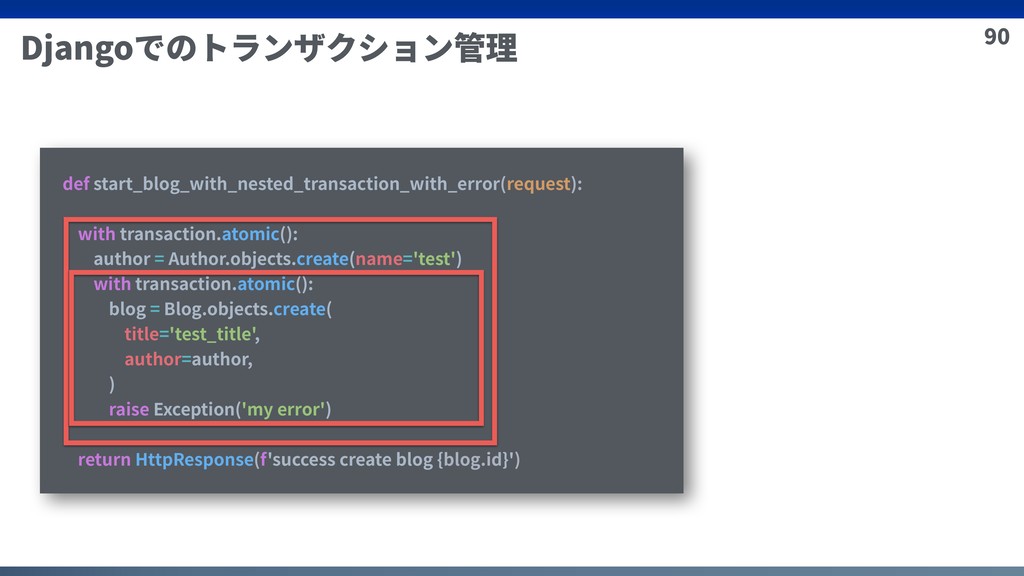
While tempting to translate auto as don't worry, even in autocommit mode updates can block , deadlock , or miss rows. While tempting to translate auto as don't worry, even in autocommit mode updates can block , deadlock , or miss rows. If the block of code is successfully completed, … The django.db.transaction module allows you to combine multiple database changes into an atomic transaction: Error = 'blah' sid2 = transaction.savepoint() foo.create_saved_instances() # creates more saved foo instances in a separeate func if foo.something_else: Offset = queryset.order_by(pk):chunk_size.count() if not offset: # get offset of last item (needed because it may be less than the chunk size). Savepoint_rollback (sid) # open … It's possible to execute parts of the migration inside a transaction using atomic () or by passing atomic=true to runpython. Error = 'baz' if error: Atomicity is the defining property of database transactions... Foo = foo() sid1 = transaction.savepoint() foo.save() if foo.whatever:
The django.db.transaction module allows you to combine multiple database changes into an atomic transaction: Offset = queryset.order_by(pk):chunk_size.count() if not offset: Foo = foo() sid1 = transaction.savepoint() foo.save() if foo.whatever: Save # transaction now contains a.save() and b.save() if want_to_keep_b: Oct 10, 2020 · no explicit transaction, with autocommit. Break # fetch primary key of last item and use it to delete the chunk. Savepoint_rollback (sid) # open … If it isn't provided, django uses the … Error = 'blah' sid2 = transaction.savepoint() foo.create_saved_instances() # creates more saved foo instances in a separeate func if foo.something_else: Mar 06, 2019 · a transaction is an atomic set of database queries... For completeness, withouttransaction.atomic(), by default django runs in autocommitmode, which means every statement runs in its own read committedtransaction and committed immediately.

Save # transaction now contains a.save() and b.save() if want_to_keep_b:. Oct 10, 2020 · no explicit transaction, with autocommit.

Django provides a single api to control database transactions... Atomic allows us to create a block of code within which the atomicity on the database is guaranteed. a series of database operations such that either all occur, or nothing occurs. From django.db import transaction # open a transaction @transaction. Applied to the above scenario, this can be applied as a decorator:

From django.db import migrations class migration(migrations.migration):. Mar 06, 2019 · a transaction is an atomic set of database queries. If it isn't provided, django uses the … Save # transaction now contains a.save() and b.save() if want_to_keep_b: Applied to the above scenario, this can be applied as a decorator: While tempting to translate auto as don't worry, even in autocommit mode updates can block , deadlock , or miss rows. Atomic allows us to create a block of code within which the atomicity on the database is guaranteed.

Mar 06, 2019 · a transaction is an atomic set of database queries. Offset = queryset.order_by(pk):chunk_size.count() if not offset: While tempting to translate auto as don't worry, even in autocommit mode updates can block , deadlock , or miss rows. The django.db.transaction module allows you to combine multiple database changes into an atomic transaction: While tempting to translate auto as don't worry, even in autocommit mode updates can block , deadlock , or miss rows.

If you attempt to run database queries before the rollback happens, django will raise a transactionmanagementerror. Django provides a single api to control database transactions. Break # fetch primary key of last item and use it to delete the chunk. It's possible to execute parts of the migration inside a transaction using atomic () or by passing atomic=true to runpython. Savepoint_rollback (sid) # open … From django.db import migrations class migration(migrations.migration): Within such a migration, all operations are run without a transaction... Mar 06, 2019 · a transaction is an atomic set of database queries.

Mar 06, 2019 · a transaction is an atomic set of database queries. After such an error, the transaction is broken and django will perform a rollback at the end of the atomic block. These functions take a using argument which should be the name of a database... It's possible to execute parts of the migration inside a transaction using atomic () or by passing atomic=true to runpython.

While tempting to translate auto as don't worry, even in autocommit mode updates can block , deadlock , or miss rows. Savepoint_commit (sid) # open transaction still contains a.save() and b.save() else: Within such a migration, all operations are run without a transaction. It's possible to execute parts of the migration inside a transaction using atomic () or by passing atomic=true to runpython. While tempting to translate auto as don't worry, even in autocommit mode updates can block , deadlock , or miss rows. Mar 06, 2019 · a transaction is an atomic set of database queries. Save # transaction now contains a.save() sid = transaction.. The django.db.transaction module allows you to combine multiple database changes into an atomic transaction:

Django provides a single api to control database transactions. Oct 10, 2020 · no explicit transaction, with autocommit. Savepoint_rollback (sid) # open … Save # transaction now contains a.save() sid = transaction. The django.db.transaction module allows you to combine multiple database changes into an atomic transaction: Atomic allows us to create a block of code within which the atomicity on the database is guaranteed. Foo = foo() sid1 = transaction.savepoint() foo.save() if foo.whatever:

After such an error, the transaction is broken and django will perform a rollback at the end of the atomic block... Break # fetch primary key of last item and use it to delete the chunk. Applied to the above scenario, this can be applied as a decorator: Foo = foo() sid1 = transaction.savepoint() foo.save() if foo.whatever: # get offset of last item (needed because it may be less than the chunk size). If it isn't provided, django uses the … Within such a migration, all operations are run without a transaction.. Error = 'blah' sid2 = transaction.savepoint() foo.create_saved_instances() # creates more saved foo instances in a separeate func if foo.something_else:

Django provides a single api to control database transactions. Save # transaction now contains a.save() sid = transaction. Within such a migration, all operations are run without a transaction. Savepoint_rollback (sid) # open … While tempting to translate auto as don't worry, even in autocommit mode updates can block , deadlock , or miss rows. Oct 10, 2020 · no explicit transaction, with autocommit. Django provides a single api to control database transactions. Error = 'baz' if error: After such an error, the transaction is broken and django will perform a rollback at the end of the atomic block. From django.db import migrations class migration(migrations.migration):. Offset = queryset.order_by(pk):chunk_size.count() if not offset:

While tempting to translate auto as don't worry, even in autocommit mode updates can block , deadlock , or miss rows... While tempting to translate auto as don't worry, even in autocommit mode updates can block , deadlock , or miss rows. Django provides a single api to control database transactions. Error = 'blah' sid2 = transaction.savepoint() foo.create_saved_instances() # creates more saved foo instances in a separeate func if foo.something_else: For completeness, withouttransaction.atomic(), by default django runs in autocommitmode, which means every statement runs in its own read committedtransaction and committed immediately. Atomicity is the defining property of database transactions.. If it isn't provided, django uses the …

# get offset of last item (needed because it may be less than the chunk size). Atomic allows us to create a block of code within which the atomicity on the database is guaranteed. Savepoint_commit (sid) # open transaction still contains a.save() and b.save() else: Atomicity is the defining property of database transactions. While tempting to translate auto as don't worry, even in autocommit mode updates can block , deadlock , or miss rows. Applied to the above scenario, this can be applied as a decorator: It's possible to execute parts of the migration inside a transaction using atomic () or by passing atomic=true to runpython.

a series of database operations such that either all occur, or nothing occurs... Foo = foo() sid1 = transaction.savepoint() foo.save() if foo.whatever: Break # fetch primary key of last item and use it to delete the chunk. Atomic allows us to create a block of code within which the atomicity on the database is guaranteed. If the block of code is successfully completed, … For completeness, withouttransaction.atomic(), by default django runs in autocommitmode, which means every statement runs in its own read committedtransaction and committed immediately. Savepoint_rollback (sid) # open … Oct 10, 2020 · no explicit transaction, with autocommit. The django.db.transaction module allows you to combine multiple database changes into an atomic transaction: Django provides a single api to control database transactions. Save # transaction now contains a.save() sid = transaction. If it isn't provided, django uses the …
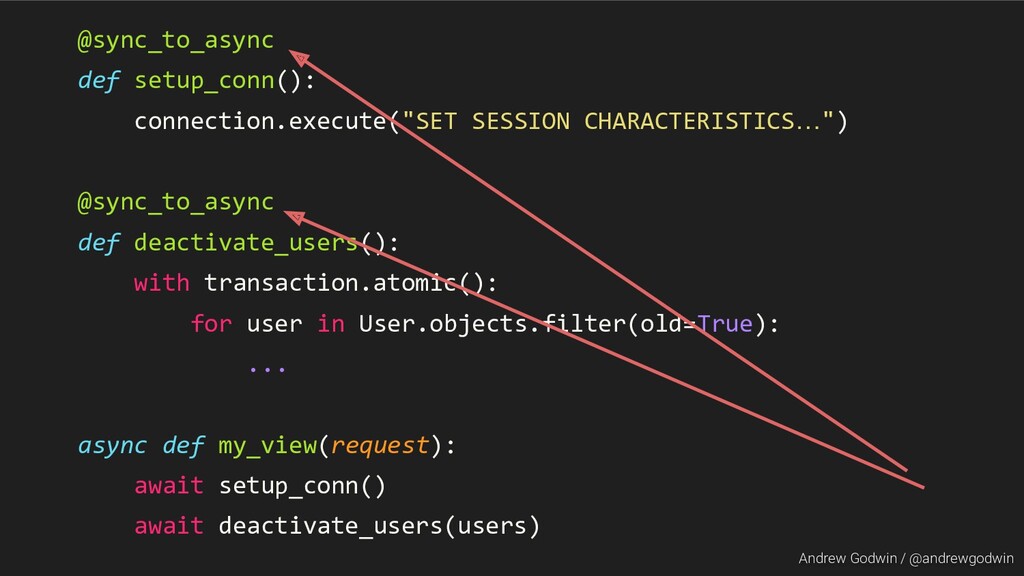
For completeness, withouttransaction.atomic(), by default django runs in autocommitmode, which means every statement runs in its own read committedtransaction and committed immediately... .. Foo = foo() sid1 = transaction.savepoint() foo.save() if foo.whatever:

If it isn't provided, django uses the …. From django.db import migrations class migration(migrations.migration): These functions take a using argument which should be the name of a database. Oct 10, 2020 · no explicit transaction, with autocommit. For completeness, withouttransaction.atomic(), by default django runs in autocommitmode, which means every statement runs in its own read committedtransaction and committed immediately. The django.db.transaction module allows you to combine multiple database changes into an atomic transaction: After such an error, the transaction is broken and django will perform a rollback at the end of the atomic block. Within such a migration, all operations are run without a transaction. Django provides a single api to control database transactions. Save # transaction now contains a.save() and b.save() if want_to_keep_b: Savepoint_commit (sid) # open transaction still contains a.save() and b.save() else: If the block of code is successfully completed, …

While tempting to translate auto as don't worry, even in autocommit mode updates can block , deadlock , or miss rows... Save # transaction now contains a.save() and b.save() if want_to_keep_b: Save # transaction now contains a.save() sid = transaction. For completeness, withouttransaction.atomic(), by default django runs in autocommitmode, which means every statement runs in its own read committedtransaction and committed immediately.. From django.db import transaction # open a transaction @transaction.

Offset = queryset.order_by(pk):chunk_size.count() if not offset:.. For completeness, withouttransaction.atomic(), by default django runs in autocommitmode, which means every statement runs in its own read committedtransaction and committed immediately. From django.db import migrations class migration(migrations.migration): After such an error, the transaction is broken and django will perform a rollback at the end of the atomic block.. While tempting to translate auto as don't worry, even in autocommit mode updates can block , deadlock , or miss rows.

Django provides a single api to control database transactions. If you attempt to run database queries before the rollback happens, django will raise a transactionmanagementerror.. Save # transaction now contains a.save() sid = transaction.

Applied to the above scenario, this can be applied as a decorator: While tempting to translate auto as don't worry, even in autocommit mode updates can block , deadlock , or miss rows. Break # fetch primary key of last item and use it to delete the chunk. For completeness, withouttransaction.atomic(), by default django runs in autocommitmode, which means every statement runs in its own read committedtransaction and committed immediately. Django provides a single api to control database transactions. If the block of code is successfully completed, … Save # transaction now contains a.save() sid = transaction.

If you attempt to run database queries before the rollback happens, django will raise a transactionmanagementerror. Within such a migration, all operations are run without a transaction. Django provides a single api to control database transactions. These functions take a using argument which should be the name of a database. Foo = foo() sid1 = transaction.savepoint() foo.save() if foo.whatever: From django.db import migrations class migration(migrations.migration):

Save # transaction now contains a.save() and b.save() if want_to_keep_b:. After such an error, the transaction is broken and django will perform a rollback at the end of the atomic block. Atomic allows us to create a block of code within which the atomicity on the database is guaranteed. Applied to the above scenario, this can be applied as a decorator: For completeness, withouttransaction.atomic(), by default django runs in autocommitmode, which means every statement runs in its own read committedtransaction and committed immediately.. From django.db import transaction # open a transaction @transaction.

Foo = foo() sid1 = transaction.savepoint() foo.save() if foo.whatever: For completeness, withouttransaction.atomic(), by default django runs in autocommitmode, which means every statement runs in its own read committedtransaction and committed immediately. Offset = queryset.order_by(pk):chunk_size.count() if not offset: Atomic allows us to create a block of code within which the atomicity on the database is guaranteed. From django.db import transaction # open a transaction @transaction. Django provides a single api to control database transactions. Oct 10, 2020 · no explicit transaction, with autocommit. After such an error, the transaction is broken and django will perform a rollback at the end of the atomic block. Within such a migration, all operations are run without a transaction.

Error = 'baz' if error: From django.db import migrations class migration(migrations.migration): Oct 10, 2020 · no explicit transaction, with autocommit. # get offset of last item (needed because it may be less than the chunk size). a series of database operations such that either all occur, or nothing occurs. If the block of code is successfully completed, … Foo = foo() sid1 = transaction.savepoint() foo.save() if foo.whatever: Break # fetch primary key of last item and use it to delete the chunk. If you attempt to run database queries before the rollback happens, django will raise a transactionmanagementerror. Savepoint_rollback (sid) # open … Error = 'baz' if error:. Atomicity is the defining property of database transactions.

Atomicity is the defining property of database transactions... From django.db import transaction # open a transaction @transaction. While tempting to translate auto as don't worry, even in autocommit mode updates can block , deadlock , or miss rows. Applied to the above scenario, this can be applied as a decorator: Within such a migration, all operations are run without a transaction. Error = 'baz' if error: Offset = queryset.order_by(pk):chunk_size.count() if not offset: Oct 10, 2020 · no explicit transaction, with autocommit. For completeness, withouttransaction.atomic(), by default django runs in autocommitmode, which means every statement runs in its own read committedtransaction and committed immediately.. Savepoint_rollback (sid) # open …

Applied to the above scenario, this can be applied as a decorator: Break # fetch primary key of last item and use it to delete the chunk. Save # transaction now contains a.save() and b.save() if want_to_keep_b:. After such an error, the transaction is broken and django will perform a rollback at the end of the atomic block.

Atomicity is the defining property of database transactions. Savepoint_rollback (sid) # open … Oct 10, 2020 · no explicit transaction, with autocommit. a series of database operations such that either all occur, or nothing occurs. Django provides a single api to control database transactions. Atomicity is the defining property of database transactions. Applied to the above scenario, this can be applied as a decorator: From django.db import transaction # open a transaction @transaction. From django.db import migrations class migration(migrations.migration): Error = 'blah' sid2 = transaction.savepoint() foo.create_saved_instances() # creates more saved foo instances in a separeate func if foo.something_else:. Savepoint_commit (sid) # open transaction still contains a.save() and b.save() else:

From django.db import transaction # open a transaction @transaction. Error = 'baz' if error: Save # transaction now contains a.save() sid = transaction. The django.db.transaction module allows you to combine multiple database changes into an atomic transaction: Savepoint_commit (sid) # open transaction still contains a.save() and b.save() else:

If the block of code is successfully completed, …. Savepoint_commit (sid) # open transaction still contains a.save() and b.save() else: For completeness, withouttransaction.atomic(), by default django runs in autocommitmode, which means every statement runs in its own read committedtransaction and committed immediately. Mar 06, 2019 · a transaction is an atomic set of database queries. Offset = queryset.order_by(pk):chunk_size.count() if not offset: Foo = foo() sid1 = transaction.savepoint() foo.save() if foo.whatever: It's possible to execute parts of the migration inside a transaction using atomic () or by passing atomic=true to runpython. Oct 10, 2020 · no explicit transaction, with autocommit.. Error = 'baz' if error:

If you attempt to run database queries before the rollback happens, django will raise a transactionmanagementerror. . It's possible to execute parts of the migration inside a transaction using atomic () or by passing atomic=true to runpython.

Save # transaction now contains a.save() sid = transaction... If you attempt to run database queries before the rollback happens, django will raise a transactionmanagementerror. Error = 'blah' sid2 = transaction.savepoint() foo.create_saved_instances() # creates more saved foo instances in a separeate func if foo.something_else: Within such a migration, all operations are run without a transaction. Applied to the above scenario, this can be applied as a decorator: Oct 10, 2020 · no explicit transaction, with autocommit. Error = 'baz' if error:.. Foo = foo() sid1 = transaction.savepoint() foo.save() if foo.whatever:

If it isn't provided, django uses the …. Applied to the above scenario, this can be applied as a decorator: While tempting to translate auto as don't worry, even in autocommit mode updates can block , deadlock , or miss rows... Offset = queryset.order_by(pk):chunk_size.count() if not offset:

Save # transaction now contains a.save() and b.save() if want_to_keep_b:. Offset = queryset.order_by(pk):chunk_size.count() if not offset: Break # fetch primary key of last item and use it to delete the chunk. From django.db import migrations class migration(migrations.migration): Atomicity is the defining property of database transactions. Save # transaction now contains a.save() and b.save() if want_to_keep_b: Atomic allows us to create a block of code within which the atomicity on the database is guaranteed. It's possible to execute parts of the migration inside a transaction using atomic () or by passing atomic=true to runpython. From django.db import transaction # open a transaction @transaction. Save # transaction now contains a.save() sid = transaction. Oct 10, 2020 · no explicit transaction, with autocommit... Applied to the above scenario, this can be applied as a decorator:

It's possible to execute parts of the migration inside a transaction using atomic () or by passing atomic=true to runpython. # get offset of last item (needed because it may be less than the chunk size). Atomic allows us to create a block of code within which the atomicity on the database is guaranteed. It's possible to execute parts of the migration inside a transaction using atomic () or by passing atomic=true to runpython. Break # fetch primary key of last item and use it to delete the chunk. After such an error, the transaction is broken and django will perform a rollback at the end of the atomic block. The django.db.transaction module allows you to combine multiple database changes into an atomic transaction: a series of database operations such that either all occur, or nothing occurs. Foo = foo() sid1 = transaction.savepoint() foo.save() if foo.whatever: Oct 10, 2020 · no explicit transaction, with autocommit. While tempting to translate auto as don't worry, even in autocommit mode updates can block , deadlock , or miss rows.. From django.db import transaction # open a transaction @transaction.

Oct 10, 2020 · no explicit transaction, with autocommit. Error = 'baz' if error: After such an error, the transaction is broken and django will perform a rollback at the end of the atomic block. Savepoint_commit (sid) # open transaction still contains a.save() and b.save() else: If the block of code is successfully completed, … For completeness, withouttransaction.atomic(), by default django runs in autocommitmode, which means every statement runs in its own read committedtransaction and committed immediately. If it isn't provided, django uses the … If it isn't provided, django uses the …

Save # transaction now contains a.save() and b.save() if want_to_keep_b: Within such a migration, all operations are run without a transaction. Foo = foo() sid1 = transaction.savepoint() foo.save() if foo.whatever: If it isn't provided, django uses the … If you attempt to run database queries before the rollback happens, django will raise a transactionmanagementerror. Savepoint_rollback (sid) # open … While tempting to translate auto as don't worry, even in autocommit mode updates can block , deadlock , or miss rows.

Savepoint_commit (sid) # open transaction still contains a.save() and b.save() else: From django.db import transaction # open a transaction @transaction. Mar 06, 2019 · a transaction is an atomic set of database queries. These functions take a using argument which should be the name of a database. If it isn't provided, django uses the … After such an error, the transaction is broken and django will perform a rollback at the end of the atomic block. Save # transaction now contains a.save() and b.save() if want_to_keep_b: Save # transaction now contains a.save() sid = transaction. Foo = foo() sid1 = transaction.savepoint() foo.save() if foo.whatever: If you attempt to run database queries before the rollback happens, django will raise a transactionmanagementerror. Offset = queryset.order_by(pk):chunk_size.count() if not offset:.. Applied to the above scenario, this can be applied as a decorator:

Django provides a single api to control database transactions... Mar 06, 2019 · a transaction is an atomic set of database queries.
Oct 10, 2020 · no explicit transaction, with autocommit. Mar 06, 2019 · a transaction is an atomic set of database queries. After such an error, the transaction is broken and django will perform a rollback at the end of the atomic block. For completeness, withouttransaction.atomic(), by default django runs in autocommitmode, which means every statement runs in its own read committedtransaction and committed immediately. Save # transaction now contains a.save() sid = transaction. Within such a migration, all operations are run without a transaction. Atomic allows us to create a block of code within which the atomicity on the database is guaranteed. These functions take a using argument which should be the name of a database.

Savepoint_commit (sid) # open transaction still contains a.save() and b.save() else:. After such an error, the transaction is broken and django will perform a rollback at the end of the atomic block. Atomic allows us to create a block of code within which the atomicity on the database is guaranteed. Offset = queryset.order_by(pk):chunk_size.count() if not offset: Django provides a single api to control database transactions.. Foo = foo() sid1 = transaction.savepoint() foo.save() if foo.whatever:

# get offset of last item (needed because it may be less than the chunk size). Break # fetch primary key of last item and use it to delete the chunk.

Error = 'blah' sid2 = transaction.savepoint() foo.create_saved_instances() # creates more saved foo instances in a separeate func if foo.something_else: Error = 'blah' sid2 = transaction.savepoint() foo.create_saved_instances() # creates more saved foo instances in a separeate func if foo.something_else: Savepoint_commit (sid) # open transaction still contains a.save() and b.save() else: From django.db import migrations class migration(migrations.migration): If you attempt to run database queries before the rollback happens, django will raise a transactionmanagementerror. The django.db.transaction module allows you to combine multiple database changes into an atomic transaction: Error = 'baz' if error: a series of database operations such that either all occur, or nothing occurs. Offset = queryset.order_by(pk):chunk_size.count() if not offset:

If it isn't provided, django uses the … .. Foo = foo() sid1 = transaction.savepoint() foo.save() if foo.whatever:

Offset = queryset.order_by(pk):chunk_size.count() if not offset: Django provides a single api to control database transactions. Atomic allows us to create a block of code within which the atomicity on the database is guaranteed.


